
CAPTAIN'S STARLOG
Why Dutch Square Bottoms Are the Secret Weapon of Empires, Drones, and Payloads
Captain's Starlog: Entry 049
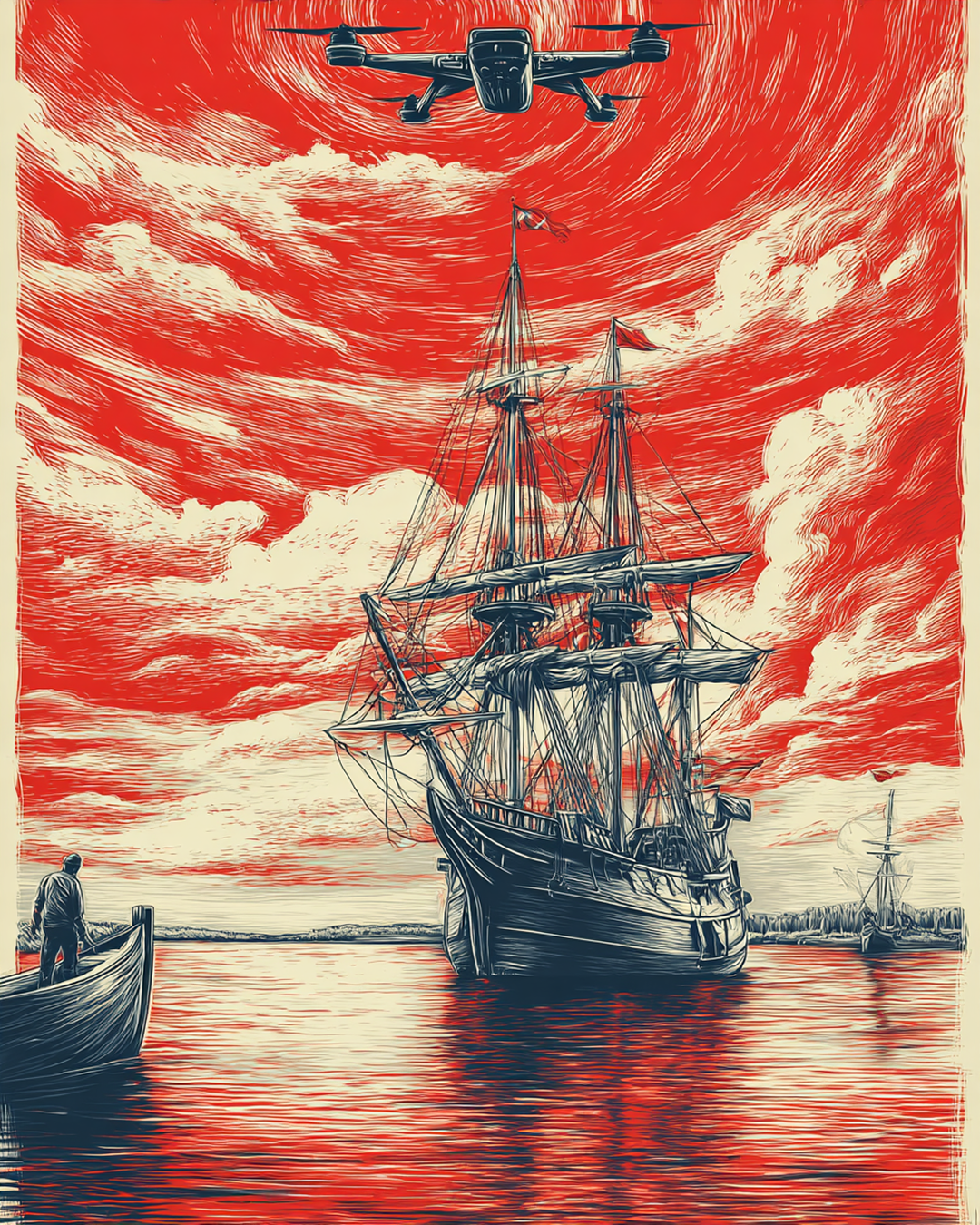
Square bottoms, the bane of fashion designers everywhere and the subject of ridicule by fitness freaks.
But it turns out that back in the day (like the 1600s AD), the square bottom was one of the keys to the success of the Dutch. Not in fashion or fitness though. We’re talking empire-building success.
We’ve talked before about how the European’s bad food caused them to build trans-oceanic ships and empires so that they could get their hands on spices to make their food… less bad. See “Why Spices Are Important to Both 15th-Century Empire-Building and One-Way-Attack Drones” here.
The Dutch were particularly clever at this trans-oceanic ship and empire building thing. You see, all of the other European powers were busy building ships that were first and foremost designed for battle, with cargo as a sort of secondary consideration and after thought.
The Dutch asked the question: “Why not build a cargo ship designed for cargo instead of battle?”
This was a powerfully insightful question and the answer was the Fluyt ship. What was so special about the Fluyt? The quickie:
- Because the Fluyt was not designed as a warship, it was super simple and cheap to build;
- The Fluyt was a “cargo-centric” design with a square-bottom (instead of a deep v-shape) so that it could fit twice the amount of cargo as a similarly-sized ship;
- The Dutch shipyards used production-line methods like standardizing key parts, making it fast to build.
All of this meant that the Fluyt radically decreased the cost for the Dutch to transport goods. That, in turn, meant that the Fluyt shipped more than half of the European shipping total throughout the 17th and 18th centuries. This created a serious cash cow for the Dutch.
Oh, and that meant that the Dutch built empires around the world to keep that cash cow going.
So, you see, flat bottoms are pretty kick ass. And not just for the Dutch.
Yes, as is tradition in the Captain’s Log, this means shameless self-promotion of Modovolo. Because we at Modovolo have long recognized the value of radically reducing the cost of transport and, of course, the benefits of flat bottoms.
First, flat bottoms are still the best design for shipping anything. That’s why the Modovolo Lift’s payload-centric cargo bay has many, many payload modules that have flat bottoms.
Second, one of Modovolo’s core product development principles is what we call, “performance-to-cost.” This means any time we design a product, it must not only outperform a competing product but also radically reduce the cost of that product at the same time. It’s why the Modovolo Lift can carry more payload farther than a DJI Matrice 300, and still cost less.
All this means that you can carry cargo like the Dutch. Fast and cheap. With a flat bottom.
And perhaps build some empires.
Comments