
CAPTAIN'S STARLOG
What Alexander the Great’s Conquests Mean for Part 108 Consensus Standards
Captain's Starlog: Entry 046
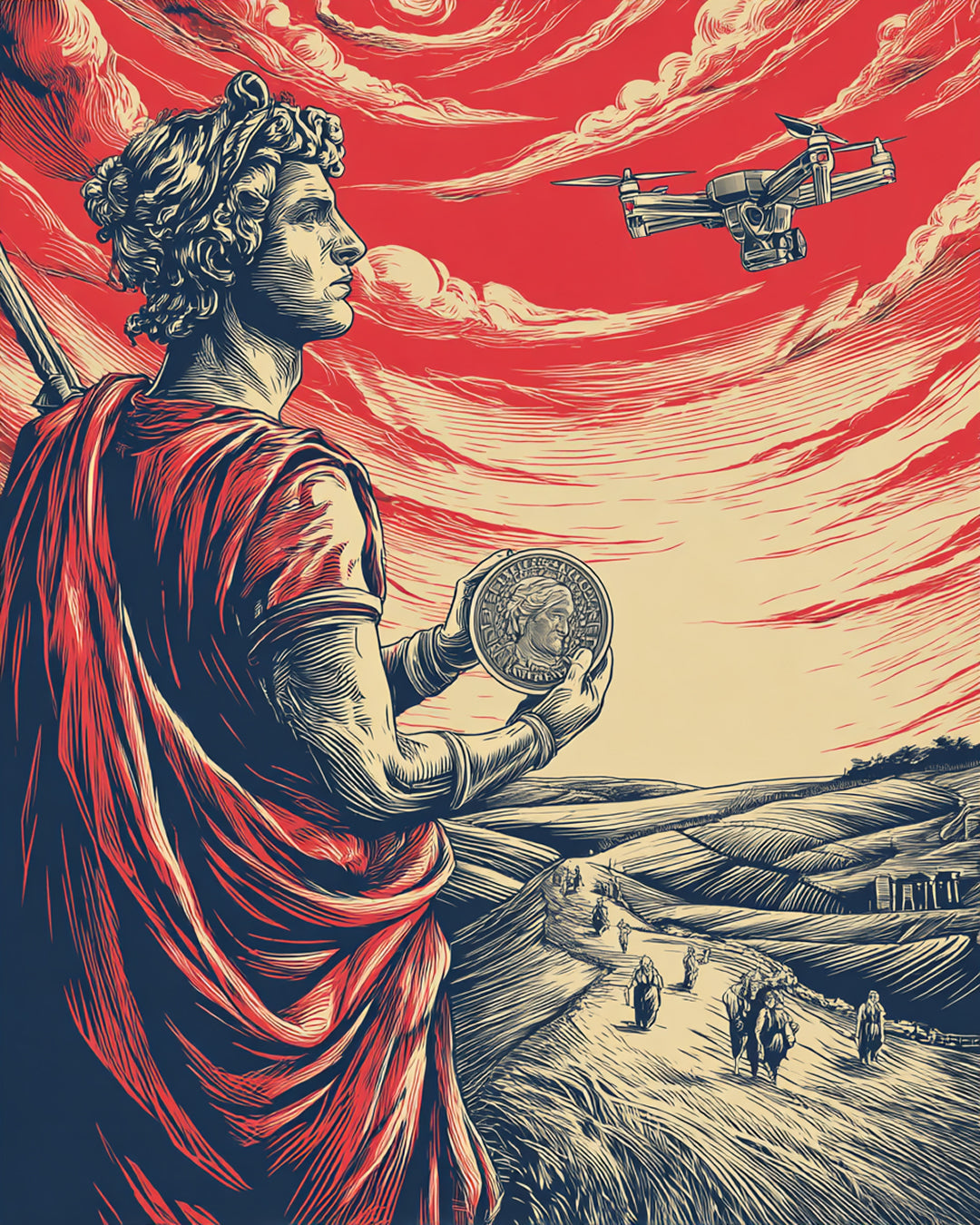
We here at Modovolo are big fans of making absurd references to historical events, two of our favorites being: “Gaius Marius, the Best Drone Designer No One Has Ever Heard Of” and “What the Decline and Fall of the Roman Empire Means for Drones Today.”
And this post takes that absurdity one step further. Because, why not?
So. Alexander the Great. He took a small, rag-tag army of about 35,000 Greeks and, in three separate battles, beat the snot out of the Persian army, which likely numbered more than 100,000. And these are all good things to make one great.
But we would argue that Alexander’s greatness was more subtle, because it turns out Alexander was equally adept at economics, free markets, and international trade.
Really? Yes, really.
Today, you can easily convert your US dollars into euros, then into yen, and so on. But most international trade happens in US dollars, which is the reserve currency of the world, aka the "standard" currency. This makes it very easy to trade with someone in another country because everyone knows and trusts the US dollar. But in the fourth century BC, there wasn't a standard currency and there were no currency exchanges to speak of. So if you wanted to trade with another city or kingdom, it was a bit of a pain. So much so that you often didn't do it. And that's a problem because trade is what makes everyone richer. Milton Friedman has a lot to say on this topic.

Ancient Greek gold stater coin of Alexander the Great, 322 BC recently sold for $44,000 on 1stDibs.
Alexander understood this. He standardized coinage throughout his empire so it was a certain size, weight and, most importantly, was made of gold. The result was that, before his untimely death, everyone was trading in standard-issue Drachmas. And the result of that result was the economies of the Eastern Mediterranean exploded, generating an insane amount of wealth (which the Romans, about two centuries later during their civil wars, would pillage like it was an ATM — but that’s a story for another day).
So. Standards. They’re good at generating economic prosperity, but are they good at anything else? It turns out the answer is yes. Because the same principle that makes standardized coinage work also applies to other standards. Like consensus standards on drone safety.
And what is this “principle” that makes standardized coinage work? It’s the principle of embedded information and trust. For example, if I see that a coin is minted with Alexander’s face, the embedded information is: hey, this coin contains a size and weight of gold (and isn’t mixed with any other metals like silver). As a result I can trust its value and use it to buy other goods and services. I don’t need to go analyze or test the coin. I don’t need to barter with goods. I don’t need to do anything other than specify that I will sell my goods for Alexander’s face (on a gold coin, aka the Drachma).
How does this relate to drone safety standards? You see, as of today, you can only fly your drone where you can see it (what the FAA nerds call "visual line of sight") unless you get a waiver from the FAA. This is not something easily done, mind you. But everyone wants to fly "Beyond Visual Line of Sight" (BVLOS) so that they can do things like drone deliveries and first responder drones, etc.
In late summer 2024, the FAA released its “Notice of Proposed Rule Making” for the new Part 108 regulations which are all about BVLOS operations for drones.
And this is where the FAA took a page from its earlier regulation efforts with small planes (aka Part 23). Instead of saying: “hey, you need to build a drone with these safety features,” the FAA said, “you need to certify that your drone is safe.” And then they said, “hey, industry, you figure out what those standards look like.”
Which is what standards groups like the ASTM (American Society for Testing and Materials) are doing now. ASTM is holding conferences with dozens of industry stakeholders, from government agencies and drone manufacturers to delivery companies and airspace management tech companies. They all have a vote and they all have a massive incentive to make BVLOS drone operations safe.
And the ASTM standards will do for the drone ecosystem what the Alexander face coins did for the Eastern Mediterranean: embed information and create trust by saying: “hey, this drone is certified safe.”
So no, the future of BVLOS doesn’t hinge on any single drone, company, or regulator. It hinges on standards that quietly do the hard work of embedding trust so no one has to renegotiate safety every single flight. Alexander figured that out with gold coins and a face stamp. Two thousand years later, we’re figuring it out with consensus standards and flight rules. Same idea. Better technology. Fewer togas.
Comments