
CAPTAIN'S STARLOG
What the Bone Wars of the 19th Century Tell Us About Part Count
Captain's Starlog: Entry 045
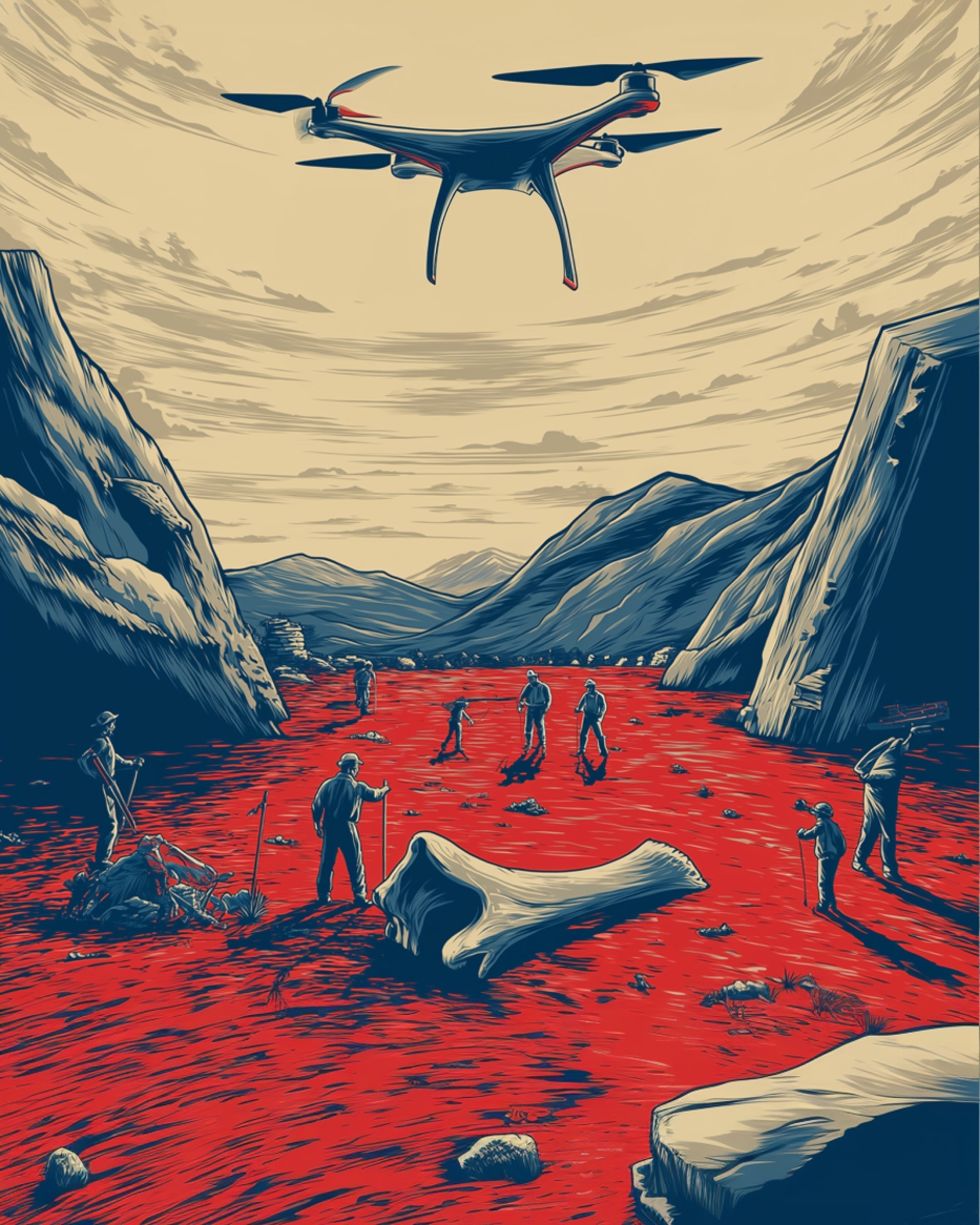
Paleontology. Just like its kissing-cousin, archaeology, it’s an example of an “ology” that would otherwise have been relegated to an extreme dark corner of the nerd universe, never seeing the light of day in popular imagination. But then the blockbuster film franchises of Jurassic Park and Indiana Jones forever changed that.
There was, however, an earlier “franchise.” It was called the Bone Wars. And while it wasn’t a film franchise, it was the 19th-century equivalent of combining Desperate Housewives, Keeping up with the Kardashians, and Raiders of the Lost Ark into one.
And the stars of the Bone Wars franchise were Othniel Charles Marsh and Edward Drinker Cope. Yes, “Othniel” was his first name (apparently after the biblical judge) and “Drinker” was Edward's middle name. And we wish we knew what drugs their respective parents used when coming up with their names.

Othniel Charles Marsh (1831–1899) and Edward Drinker Cope (1840-1897), rival American paleontologists. Photograph by Frederick Gutekunst in 1897.
Moving on. You see, it all started out as a classic paleontology bromance. Marsh and Cope, both Americans, met in Berlin in the 1860s (yes, in the middle of the U.S. Civil War). And with a guy named "Drinker" involved, we're guessing they both got insanely drunk in a Berlin bar and came up with a dumb idea.
Cope: “You know what we should do. We should dig for dinosaur bones together.”
Marsh: “We should totally do that!”
Cope: “I’ve got this sweet quarry pit in New Jersey. I’m pretty convinced it has some cool shit in it. Plus the ladies think it’s cool.”
Marsh: “I’m in! Let’s do it!”
Unlike most drunken ideas, Marsh and Cope actually did this short-lived-bromance-paleontology escapade in the Summer of '69 (that is, the summer of 1869).
But like most drunken ideas, it was still a bad idea. Well, at least for Cope. Because after the summer of '69 bromance ended, unbeknownst to Cope at the time (but beknownst to us now), Marsh paid off one of the quarry foremen to find dinosaur bones on the side and send them to him up at Yale without telling Cope.
And that was the start of an epic 30-year feud. When Cope found out about the side deal with the quarry foreman, he went apoplectic and vowed to crush Marsh.
And this “crushing” got out of control really fast. Cope would pay Marsh’s digging crews to give him intel and vice versa. The two rival digging crews physically fought each other, throwing stones and punches. But the ultimate was when Marsh created a fake warrant for Cope’s arrest and paid off a sheriff in a small Wyoming town to enforce it, keeping Cope in jail for several days and away from an important digging site.
Why such drama, you ask? Like all good academic feuds, this was all about fame and recognition. Marsh and Cope were in a race. A race to see who could find the most dinosaur species first. Because finding a new dinosaur species meant it was news-worthy. And that Cope was better than Marsh and that Marsh was better than Cope. You get the idea.
This also meant that the “part count” of dinosaur bones was very important: you couldn’t wait until you had all the dinosaur bone parts before publishing. Because if Cope waited too long, then Marsh could win. And vice versa. Both Cope and Marsh had to develop ways to identify an existing species or confirm a new species with the lowest number of parts possible.
The lesson is: the lowest part count wins.
And we’re sure you saw this coming, but we’re going to say it anyway: yes, the Modovolo Lift part count is the lowest by far. Comparable drones have part counts of over 1,000, but the Modovolo Lift part count is just 118. Including screws.
Why is part count important? Well, beyond just making an absurd analogy to a 19th-century paleontology feud? We’re glad you asked.
Quality Control
Fewer parts mean higher quality. This is a lesson that even the great Elon Musk has learned: the “best part is no part.”
Repairability
Fewer parts means it’s far easier to repair. It takes less time, less effort, and far less instruction.
Lower Cost
Fewer parts means less parts to build or buy. And, more importantly, it takes far less time to assemble the entire drone. And that means lower cost to our customers.
And that’s really the point of the Bone Wars analogy. Progress doesn’t come from piling on more parts, more complexity, or more ego. It comes from ruthless clarity about what actually matters — and eliminating everything else. Marsh and Cope learned that the hard way. We learned it by counting parts. In both cases, the winner isn’t the one with the biggest pile of parts.
Comments